
I have spent endless hours observing reels spin, and I assure you that few things in online gaming provide the same electric charge as a high volatility slot. These games are not created for low-stakes, low-risk amusement. They are built for players who are prepared to endure stretches of silence in exchange for the possibility of a enormous, life-changing payout. Understanding how these machines operate is not just a point of curiosity; it is a practical necessity if you want to manage your bankroll wisely. At Mega Fire Blaze Roulette bonus code, we observe players lean toward these titles every day, drawn by the promise of thrilling bonus rounds and multiplier chains. This article will walk you through the mechanics, the risks, the rewards, and the strategic mindset required to tackle high volatility slots without letting them dictate your financial well-being.
Explaining Strong Volatility from Mathematical Terms
When describing volatility within slot games, I am talking about the risk profile built into the game’s mathematical model. A high-risk slot has a payout distribution that can be extremely skewed. Practically speaking, this means the game will produce a long sequence of losing spins or minimal payouts that do not cover your initial stake. The return-to-player, or return to player, is always computed over millions of spins, but the path to that theoretical return is treacherous and uneven. You might spin 200 times and watch your balance drop by 70 percent until a single bonus feature triggers and restores everything all at once.
The key metric here is the hit frequency, that often drops below 20 percent in these games. That means over eight out of ten spins, on average, will return nothing at all. This is not a design issue; it is the engine that supports the enormous jackpots and 5,000x or 10,000x multipliers that are shown in the paytable. Developers utilize complex variance models to ensure that the top prizes are incredibly high while the base game remains intentionally barren. I continuously recommend players to review the game’s information sheet, where you may find the volatility rating directly mentioned, even though many providers only describe it as high, medium, or low without providing the exact standard deviation.
What makes this mathematical structure so appealing is the potential for a payout distribution that goes against normal expectations. Different from a low volatility game where you might grind out a 95 percent return over an hour with minor, consistent payouts, a high volatility slot can leave you deep in the red for an entire session before a single feature propels you into profit. This binary outcome structure is what produces the adrenaline rush. Realizing that the game is built for extreme variance helps you set realistic expectations before you even place your first bet.
Feature Systems That Amplify Variance
Modern slot development has implemented a selection of reward features that drive variance to extreme levels, and I want to walk you through the most significant ones. The primary is the notion of persistent or accumulating features. In some games, you collect tokens or charge a gauge over numerous or even thousands of spins. The meter never resets between sessions, which creates a compelling commitment dynamic. The eventual payout when the meter fills can be enormous, but the process to get there is a lengthy struggle of below-average returns. This mechanic essentially confines you to a prolonged volatility curve that extends across multiple sessions.
Another high-impact mechanic is the gamble feature built directly into the feature round. Before your free spins commence, you may be offered a wheel spin or a card bet to earn more spins or a greater base multiplier. Losing the gamble can diminish your bonus to a minimal, underwhelming payout, while winning can set up a enormous result. I treat these gamble options with significant wariness. The numerical projected value might be balanced or even slightly positive in some infrequent cases, but the actual outcome is a dramatic increase in the fluctuation of an already variable feature.
Additionally, there are the “hold and win” respins mechanics with jackpot coins. These features usually lock symbols in place and award three re-spins that reset each time a fresh symbol lands. The rewards on the symbols span from small instant values to massive fixed jackpots. The mechanic is designed to tempt you with one or two jackpot symbols landing early, generating a near-miss tension that is practically unbearable. Covering the entire grid with locked symbols unlocks the grand jackpot, but the likelihood of doing so is vanishingly small. These mechanics center the game’s entire payout potential into a single, dramatic feature that can define your entire month of play.
- Escalating multiplier free spins with no upper limit create the potential of a single spin paying thousands of times your stake.
- Continuous meter collections that span multiple sessions commit you into a long-term variance obligation.
- Bonus buy options listed above 100x your stake indicate an very rare but possibly explosive organic trigger rate.
- Gamble features within bonus rounds can increase your free spins or cut them to nothing, heightening an already volatile outcome.
- Hold and win jackpot mechanics gather payout potential into a unique grid-filling event with very low probability.
Money Management as a Survival Tactic
If you approach a high volatility slot with the identical stakes you would use on a stable game, you are setting yourself up for a extremely brief session. I approach bankroll management here with a endurance-first mindset. The objective is not to maximize playtime in the conventional sense but to guarantee you have sufficient resources to survive the unavoidable losing streaks and still be active when the bonus round ultimately hits. A typical guideline I apply is to have at least 200 to 300 times my base bet ready before I contemplate sitting down at a high volatility title.
Let me give you a concrete example. If you are playing a game with a lowest stake of 0.20 credits, that appears safe. But if you are spinning at 1.00 credit per round, a balance of 100 credits gives you only 100 spins. In a game with a strike rate of 18 percent and a bonus activation rate of once every 250 spins on average, you could easily burn through your full funds without encountering a single bonus. I advise a lowest session funds of 300 units for any high variance round, and that sum can evaporate rapidly. Reducing your bet size down to prolong your spin count is often the gap between catching the big wave and losing everything before it arrives.
Stop-loss limits are not a proposal in this scenario; they are a crucial tool. I establish a hard loss limit before I commence, typically 50 percent of my designated session funds. If I trigger that point, I quit, no deviations. The resolve to accept a loss and come back another day avoids the frantic attempt that high volatility games can provoke. Similarly, I establish a win goal. If a bonus round increases by a factor of two or three my opening funds, I pocket a large share of those profits immediately. Cupidity is the quickest route to surrender a hard-to-get, hard-won jackpot to the machine that just gave you winnings.
Recognizing High Variance Games by Their Attributes
You do not always require a volatility rating tag to identify a high variance slot. I seek specific structural indicators in the game’s layout that reveal its risk profile. The first and most obvious marker is the maximum win potential. When a game promotes a top prize of 20,000x, 30,000x, or even 50,000x your stake, that money has to come from somewhere. It comes from the suppressed payments in the base game. A paytable that shows enormous gaps between the low-paying symbol clusters and the premium symbol five-of-a-kind wins is another telltale sign.
The bonus feature systems are particularly telling. Games that provide a progressive multiplier during free spins, where each winning cascade increases a multiplier with no upper boundary, are almost always high volatility. Think of mechanics where you collect scatter symbols to advance tiers or access additional rows. These layered, multi-stage bonus rounds gather the game’s payout potential into a single, rare event. When I observe a slot with a “bonus buy” feature priced at 100x or 150x the base bet, I know immediately that the organic trigger rate is very low, and the feature itself is able to delivering extreme results, including a complete loss on the bonus purchase.
Pay notice to the symbol layout on the reels. High volatility slots often feature stacked premium symbols that can fill entire reels during a bonus but show only in fragmented, teasing clusters during normal play. The presence of a “double chance” ante bet mechanic, where you pay an additional percentage per spin to boost the scatter hit rate, is a direct admission from the developer that the base game hit frequency is punishingly low. These design choices are not obscured; they are proudly displayed because they appeal to directly to players who crave that high-risk, high-reward structure.
The Psychological Pull of chasing the Big Win
I have noticed that high volatility slots activate a very specific mental reward mechanism. The intermittent reinforcement schedule they implement is one of the most powerful conditioning mechanisms identified in behavioral psychology. When a reward is given unpredictably and infrequently, the brain’s dopamine response actually intensifies during the anticipation phase. You are not merely playing for the win; you are playing for the mounting tension that precedes it. This is why a bonus buy feature, where you pay a lump sum to jump directly into free spins, can feel so alluring yet so hazardous.
The near-miss effect is magnified significantly in these games. Because the reels are designed to stop just short of a massive symbol combination with alarming frequency, your brain processes that close call as a sign that a win is near. It is not. The random number generator has no memory, and each spin is an independent event. I have seen rational players chase a bonus round for hundreds of spins because they felt it was “due,” only to exhaust their entire session budget. Acknowledging this mental trap is the first step toward keeping control.
Another psychological layer is the communal validation generated by massive win screenshots shared in forums and on streaming platforms. When you see a player hit a 15,000x multiplier on a high volatility slot, it creates a vivid, accessible mental image that distorts your perception of probability. You remember the jackpot, not the thousands of losing sessions that funded it. I always remind myself that for every posted screenshot of a monumental win, there are countless untold stories of deposits lost without ceremony. Keeping this perspective steady is essential for a healthy relationship with high variance gaming.
Analyzing High Volatility Slots with Other Casino Games
I consider it useful to place high volatility slots in the larger context of casino gaming to explain what renders special. At Mega Fire Blaze Roulette, our gaming site features a complete spectrum of games, and the contrast between a high variance slot and a game of live roulette is informative. In European roulette, the house edge is a stable 2.7 percent on many bets, and the outcomes display a normal distribution over time. A straight-up bet on a lone number pays 35 to 1 and hits approximately once every 37 spins. The variance is present, but the mathematical boundaries are obvious and immutable.
High volatility slots operate in a distinct universe of variance entirely. The house edge is embedded into a complex mathematical model where the RTP is realized only over millions of spins, and the distribution of returns is path-dependent on bonus feature triggers. A one bonus round can pay anywhere 5x to 10,000x your stake, and that range is what creates the wild swings. Even within the category of table games, no typical blackjack or baccarat side bet replicates the variance profile of a modern high volatility slot. The nearest analog might be a multi-leg accumulator sports bet, where a small stake can return a five-figure return, but even that comparison falls short because slot outcomes are generated instantly and continuously.
This distinction matters for realistic bankroll distribution. When I take a seat at a live blackjack table, I predict a fairly smooth session where disciplined basic strategy holds my losses in check and my wins unremarkable. When I load a high volatility slot, I expect a thrill ride. I allocate a smaller portion of my overall entertainment budget to these games exactly because the risk of ruin is so much greater. Comprehending where high volatility slots sit on the wider risk spectrum aids you build a harmonious approach to your total gaming activity on the site.
Incorporating High Volatility Play into a Balanced Gaming Routine
I do not believe high volatility slots should take over your entire session. They work best as a key component within a varied approach to online gaming. At Mega Fire Blaze Roulette, the game lobby is structured to give you easy access to live dealer tables, instant win games, and a wide range of slot volatility profiles. I often start a session with a steady, lower variance game to establish a baseline and protect my bankroll. A few rounds of live roulette or a medium volatility slot with a high hit frequency can generate the small wins that fund a calculated shot at a high variance title.
The platform facilitates this kind of flexible play with payment methods that process deposits instantly and withdrawals within typical industry timeframes of 24 to 72 hours for e-wallets. This means you can fund a session, move between game types seamlessly, and cash out your winnings without friction. I appreciate that the site is built on a mobile-responsive framework, so the full game library, including the most demanding high volatility slots with complex animations, runs smoothly on a smartphone browser. There is no need to download a dedicated app; the experience is consistent across devices, which matters when you want to manage a session carefully on the go.
Licensing and security are the cornerstone that makes any discussion of volatility pertinent. The platform operates under a acknowledged regulatory framework that requires independent auditing of random number generators and game fairness. When I discuss about hit frequencies and RTP percentages, I am addressing games that have been verified to operate as advertised. This is not a abstract exercise; it is a concrete reality enforced by regular compliance checks. The encryption protocols securing your financial transactions and personal data are industry standard, which means you can zero in on the strategic decisions around volatility without concern about the integrity of the platform itself.
What genuinely distinguishes this experience apart is the balanced balance between high-octane slot action and the grounded appeal of live dealer games. You are not confined into a single mode of play. You can go after a 10,000x multiplier on a feature-rich slot, then switch to a live roulette table and apply a wholly different risk calculus. This flexibility is, in my view, the most beneficial way to interact with high volatility gaming. It preserves the experience fresh and avoids the tunnel vision that can lead to chasing losses on a single unforgiving title.
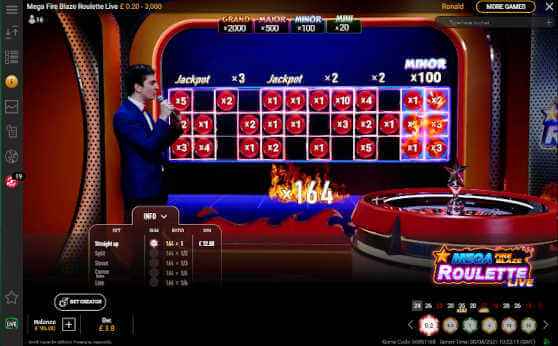
High-variance slots are not a puzzle once you grasp the mathematical and psychological forces at work. They are precision-engineered entertainment products designed to offer rare, thrilling highs in exchange for prolonged periods of loss. Handling them through a sound bankroll strategy, a firm grasp of the bonus mechanics that dictate their variance, and a commitment to disciplined session management converts them from a financial hazard into a truly thrilling component of a broader gaming routine. The key takeaway I want to pass you with is this: the games will always be there, but your bankroll will not be unless you preserve it. Set your limits, know what you are playing, and never let the pursuit for a life-changing multiplier overrule the fundamental truth that every spin is a fresh, independent roll of the digital dice.